Nitrogen Use Efficiency (NUE) & Nitrogen Uptake

Calculate TAN, NU, NUE, and nitrogen surplus from as-applied N and yield/protein data. Use maps and stats to spot over- and under-application zones and plan next-season nitrogen.

Use GeoPard to quantify Nitrogen Use Efficiency (NUE) and nitrogen uptake. Use real operations data. Use it for precision nitrogen management and post-season review. This workflow was developed with LVA (John Deere dealer, Germany) and a wheat grower.

Read the full case study: Nitrogen use efficiency use case from LVA (John Deere, Germany)arrow-up-right.

What you calculate (Nitrogen usage profile)

These are the four key outputs GeoPard maps and summarizes per field:

  • Total Applied Nitrogen (TAN), kg N/ha Sum of applied nitrogen from all in-season application operations.

  • Nitrogen Uptake (NU), kg N/ha Estimated from harvest yield + quality attributes (example: crude protein).

  • Nitrogen Use Efficiency (NUE), % NUE=NUTAN×100%NUE = \frac{NU}{TAN} \times 100\%

  • Nitrogen Surplus (NS), kg N/ha NS=TANNUNS = TAN - NU

circle-info

If you only remember one thing: NUE and NS are “input vs output” checks. They help you see where N was likely over- or under-applied.

Field context (example setup)

In 2023, Baumgärtel GbR focused on improving wheat growth in their fields. They implemented a four-step nitrogen application strategy, initiating with an SSA treatment in February and then proceeding with three subsequent AHL treatments during spring. This nitrogen application was tailored using a site-specific methodology. Moreover, the HarvestLab GrainSensing System played an important role, offering the crude protein data layer, which is directly associated with the nitrogen absorbed by the plants.

More context: Nitrogen management at Baumgärtel farmarrow-up-right.

Data capture and preparation

Machinery datasets are the foundation for NUE. GeoPard can ingest them via the John Deere Operations Center integration or via file/API imports.

For a full nitrogen profile you need:

  • Applied nitrogen operations (as-applied).

  • Harvest (yield) dataset with yield mass and (ideally) protein. Import details: Yield Data.

Nitrogen application data (as-applied)

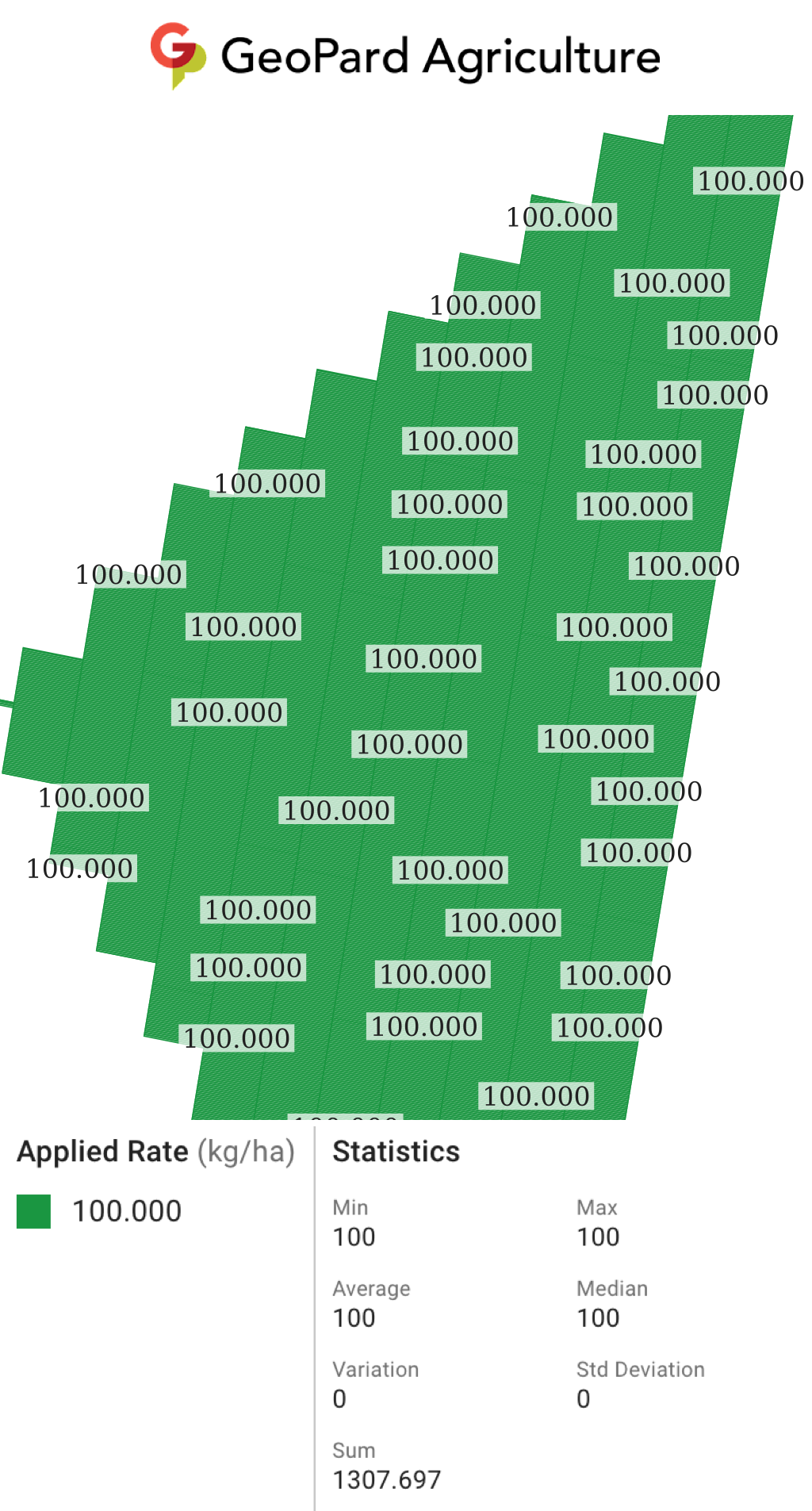
During the 2023 growing season, the wheat crop underwent a meticulously structured nitrogen application schedule, comprising four separate treatments:

  1. SSA product on February 23, 2023

  2. AHL product on March 18, 2023

  3. AHL product on April 6, 2023

  4. AHL product on May 13, 2023.

Nitrogen application map (SSA) on 2023-02-23
Nitrogen Application (SSA Product) 2023-02-23
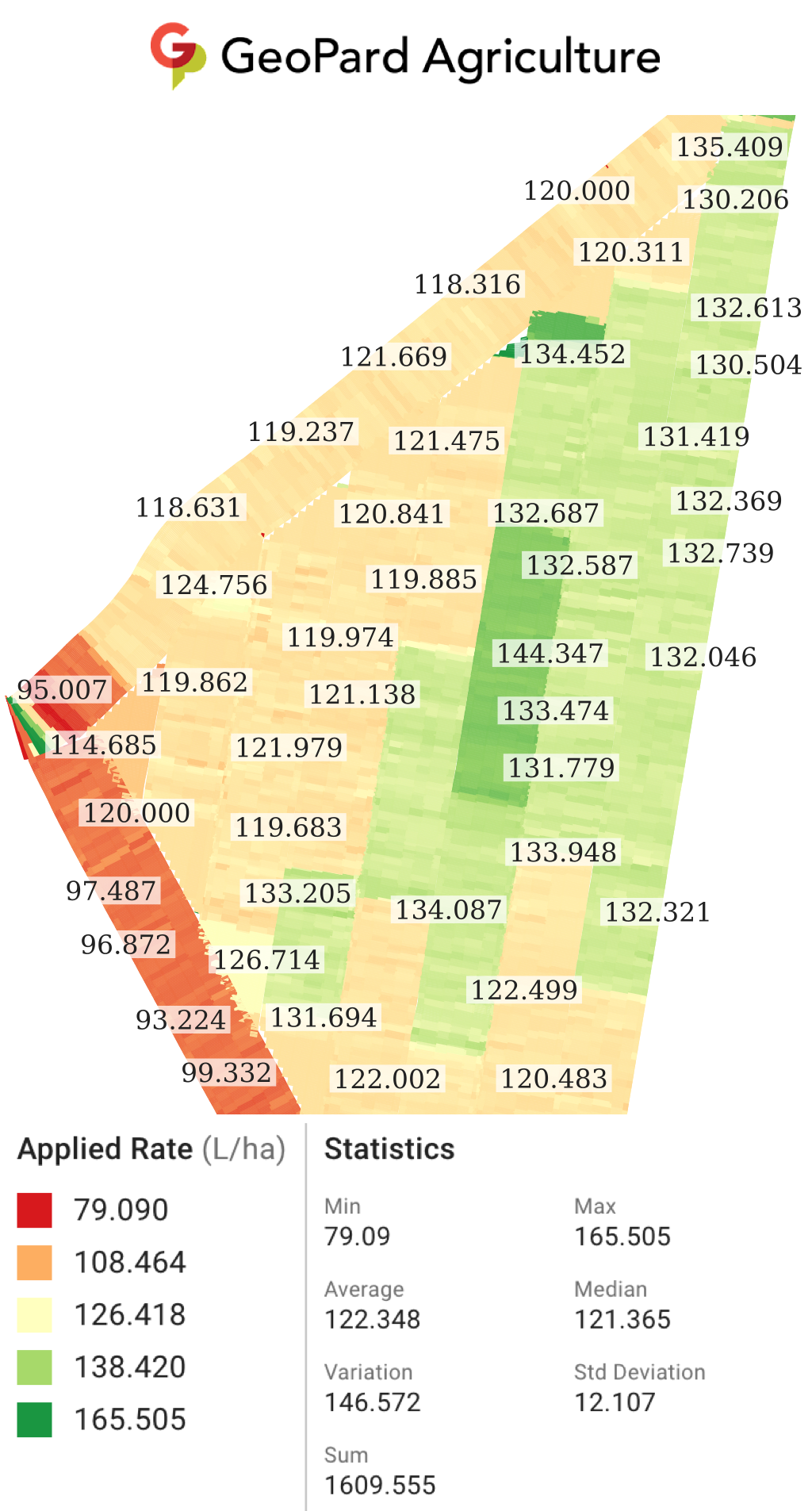
Nitrogen application map (AHL) on 2023-03-18
Nitrogen Application (AHL Product) 2023-03-18
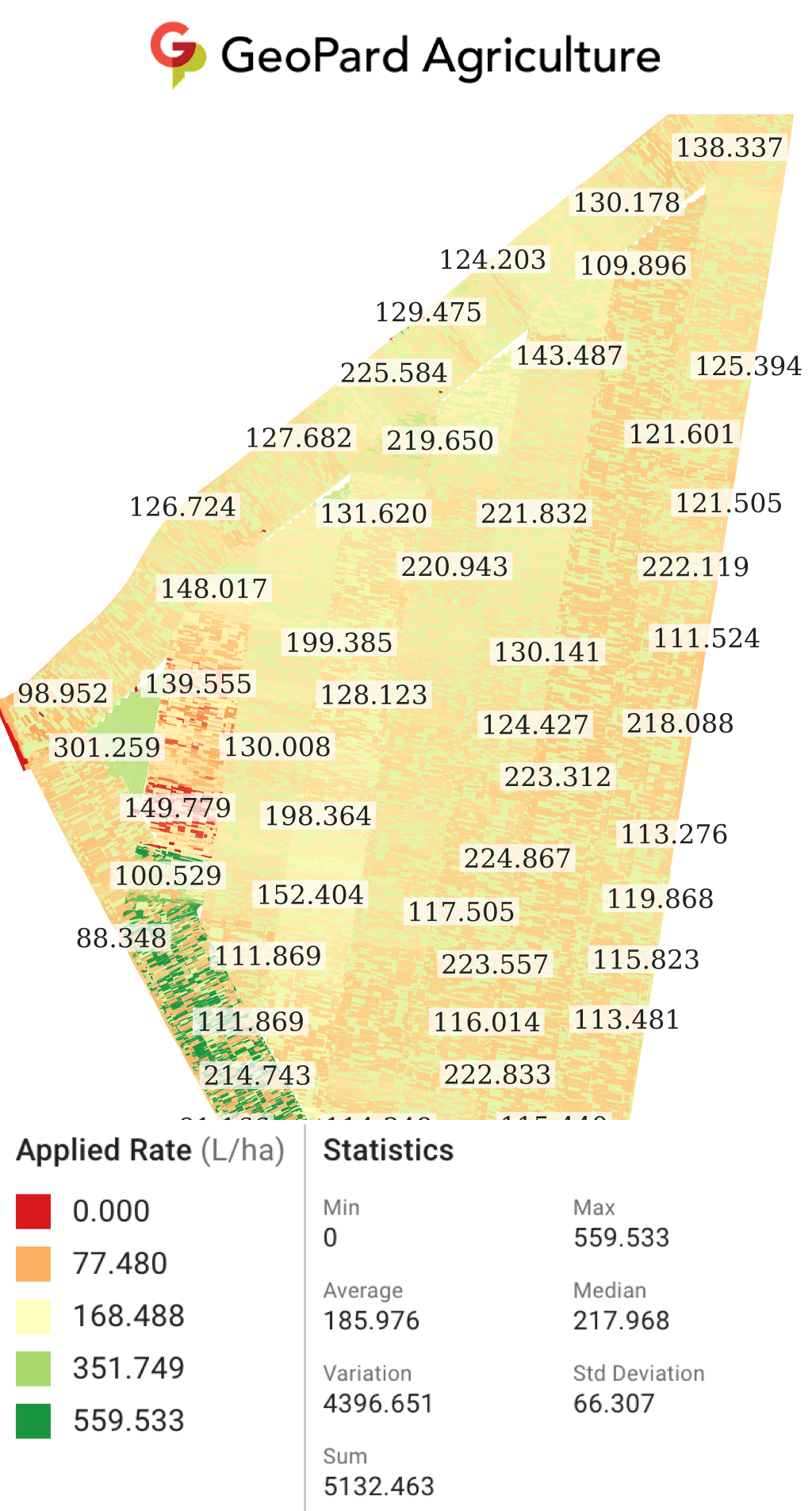
Nitrogen application map (AHL) on 2023-04-06
Nitrogen Application (AHL Product) 2023-04-06
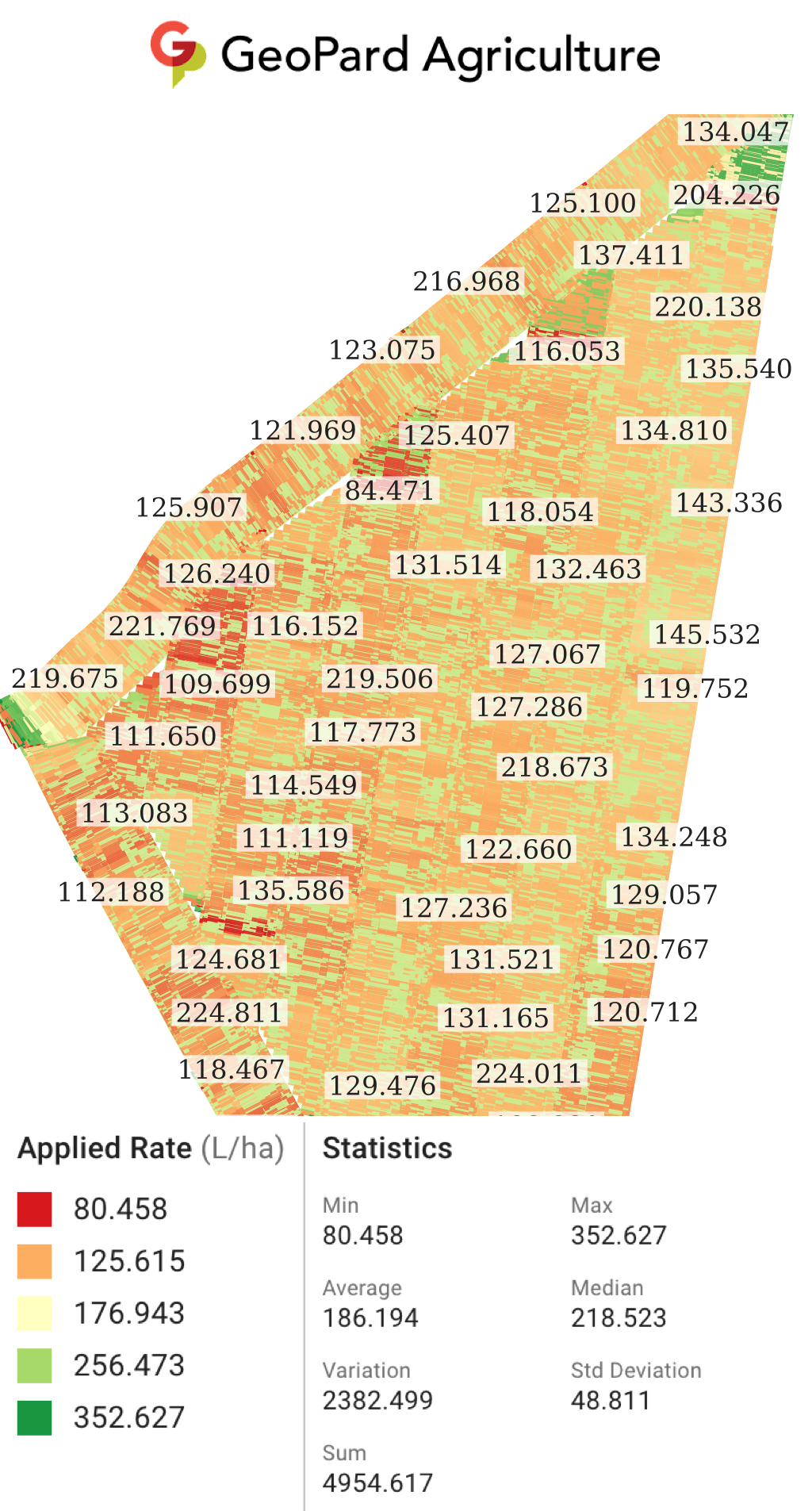
Nitrogen application map (AHL) on 2023-05-13
Nitrogen Application (AHL Product) 2023-05-13
Harvesting (yield) data

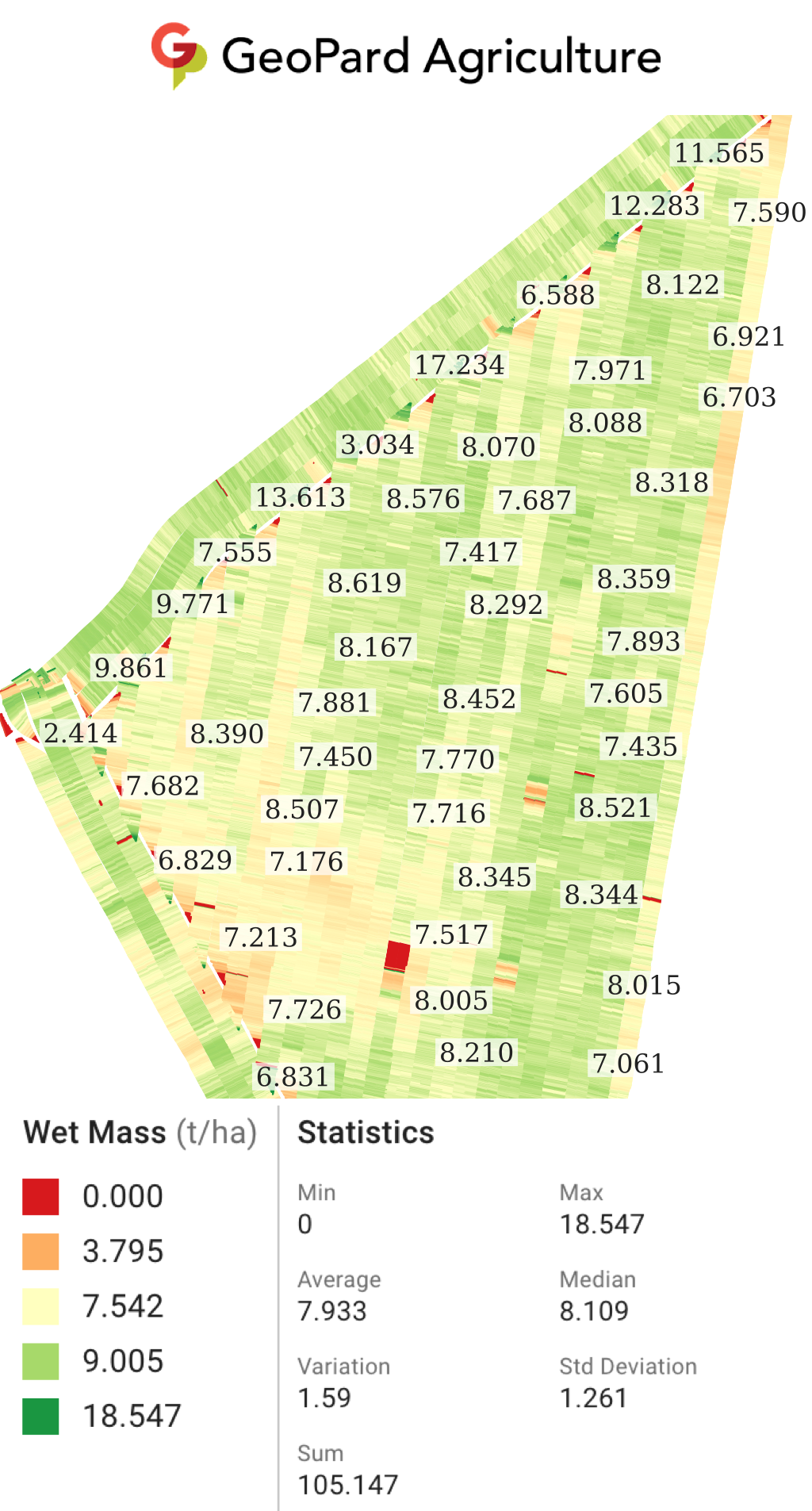
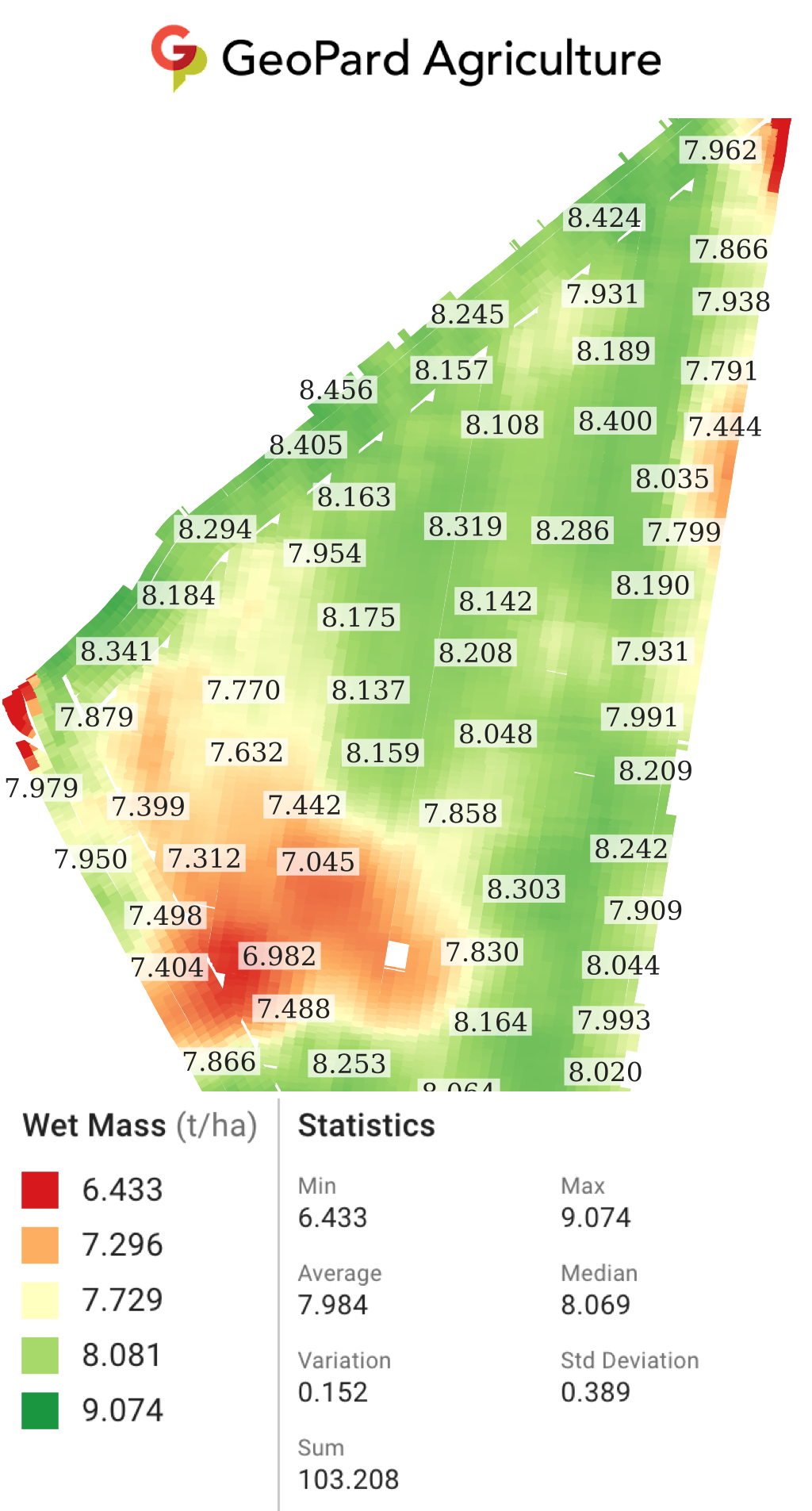
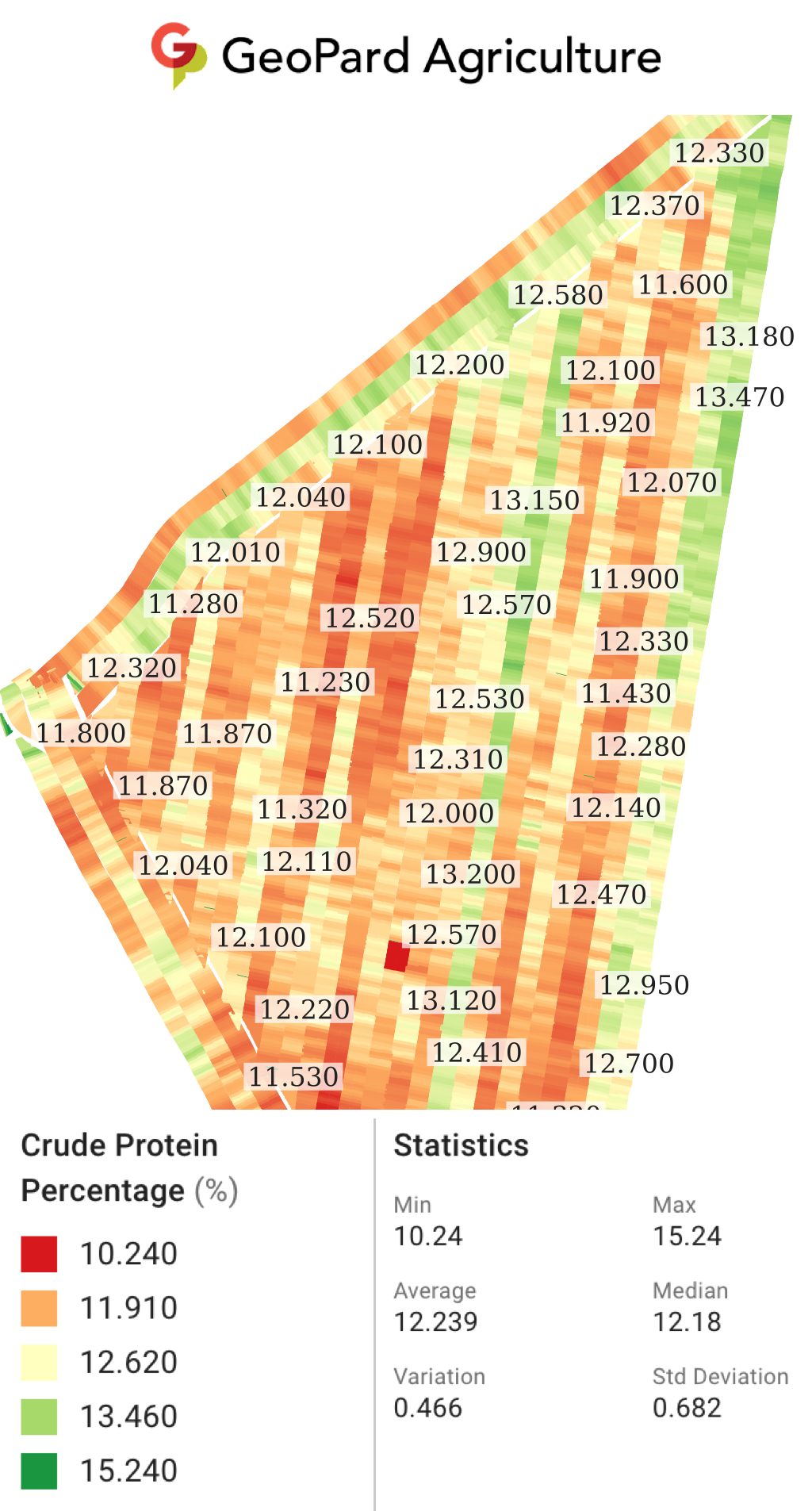
The August 8, 2023, harvest dataset, featuring key attributes like WetMass and CrudeProtein, serves as a foundation for calculating Nitrogen Uptake (NU). However, to ensure analytical precision and account for variability, additional calibration of the Yield Dataset is essential, especially in instances of exceptional yields, such as the notable 19 t/ha for wheat.

Recommended: Yield Calibration & Cleaning.

Harvest map 2023-08-08 showing crude protein
Harvest 2023-08-08: CrudeProtein
Harvest map 2023-08-08 showing wet mass yield
Harvest 2023-08-08: WetMass
Calibrated wet mass yield map for harvest 2023-08-08
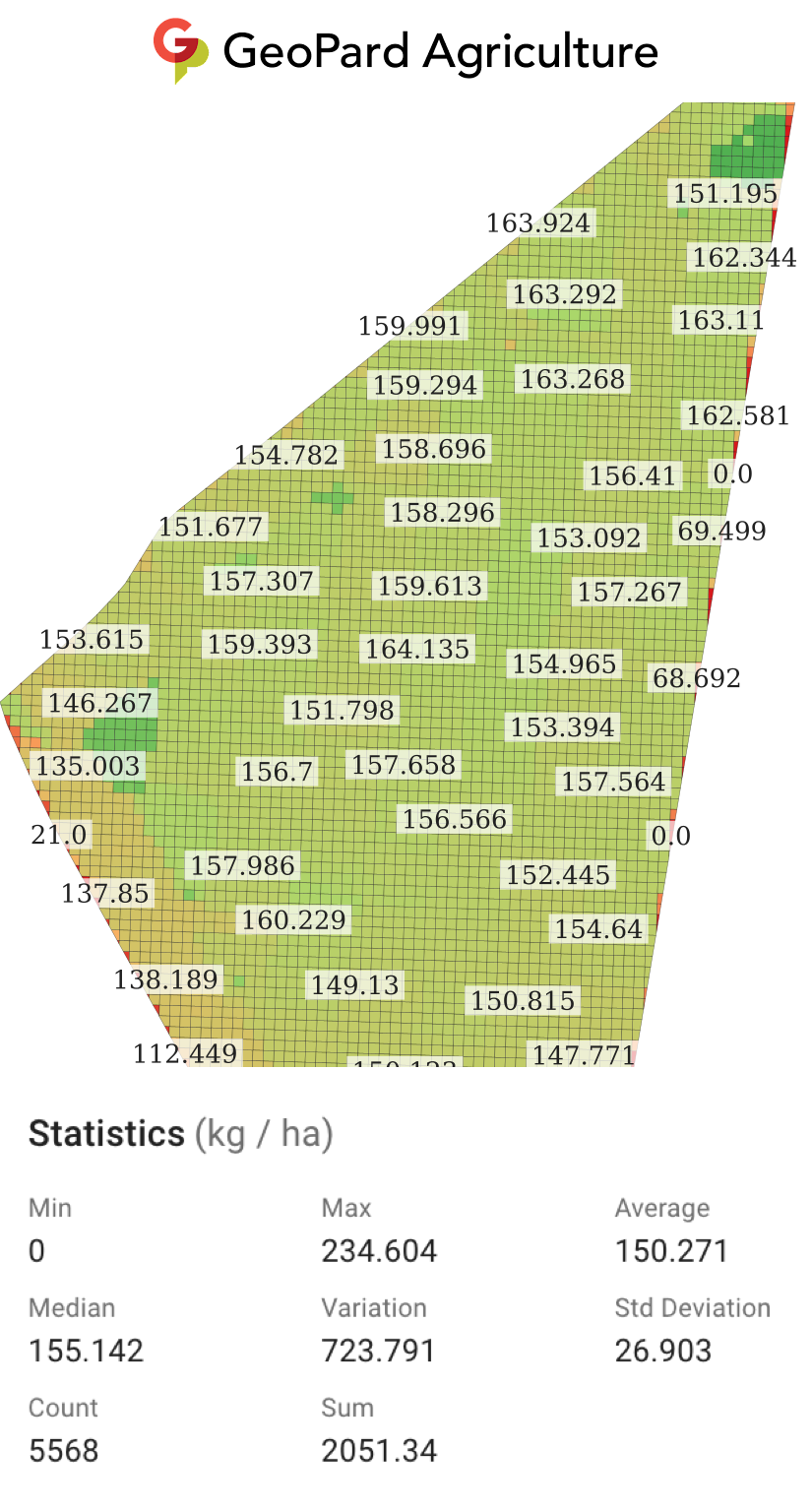
Harvest 2023-08-08: WetMass Calibrated

Total applied nitrogen (TAN)

Total Applied Nitrogen (TAN) represents the total nitrogen applied to a field, measured in kg/ha, and is calculated from the sum of actual nitrogen products used during the crop season. In pursuit of maximum accuracy, this evaluation exclusively considers the actual AppliedRate data.

Total applied nitrogen (TAN) map in kg/ha for 2023
Total Applied Nitrogen (TAN) 2023

Nitrogen uptake (NU)

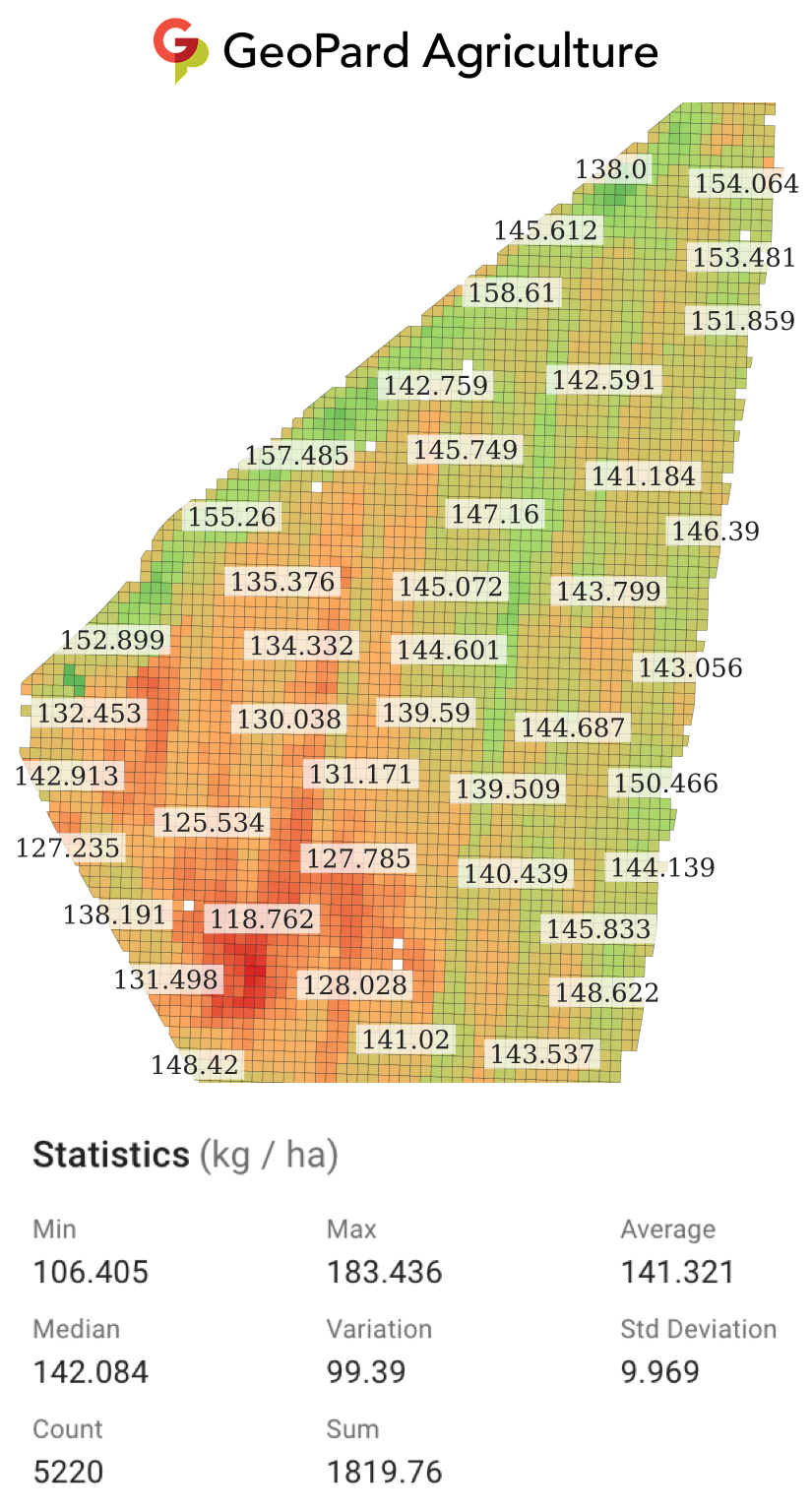
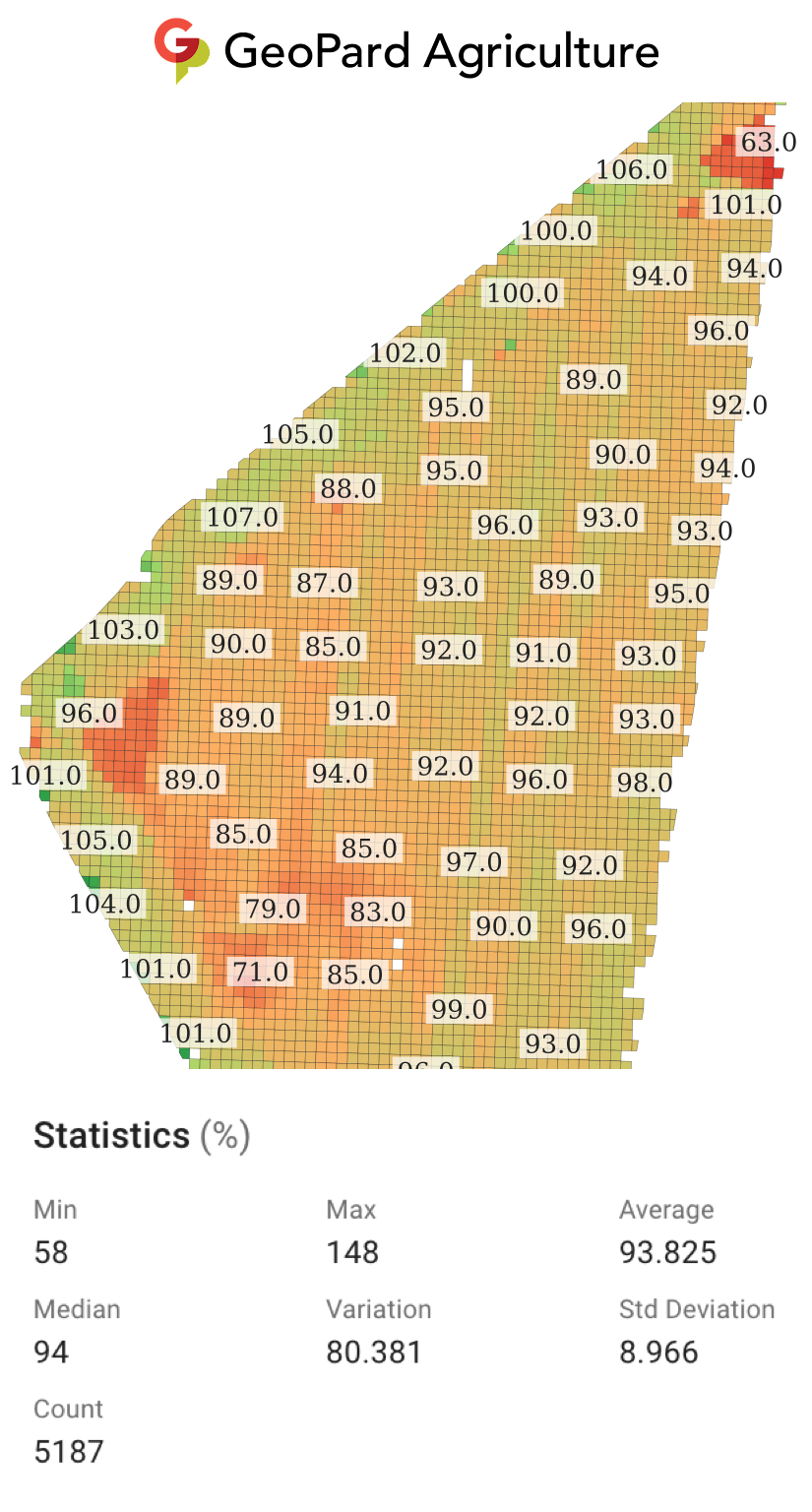
Nitrogen Uptake (NU) quantifies the nitrogen consumed by plants during their growth season and is calculated using two vital components: the crude protein measurement from the HarvestLab Grain Sensing System (1) and the total harvested yield mass (2). Here NU is expressed in absolute terms as kg/ha.

Nitrogen uptake (NU) map in kg/ha for 2023
Nitrogen Uptake (NU) 2023
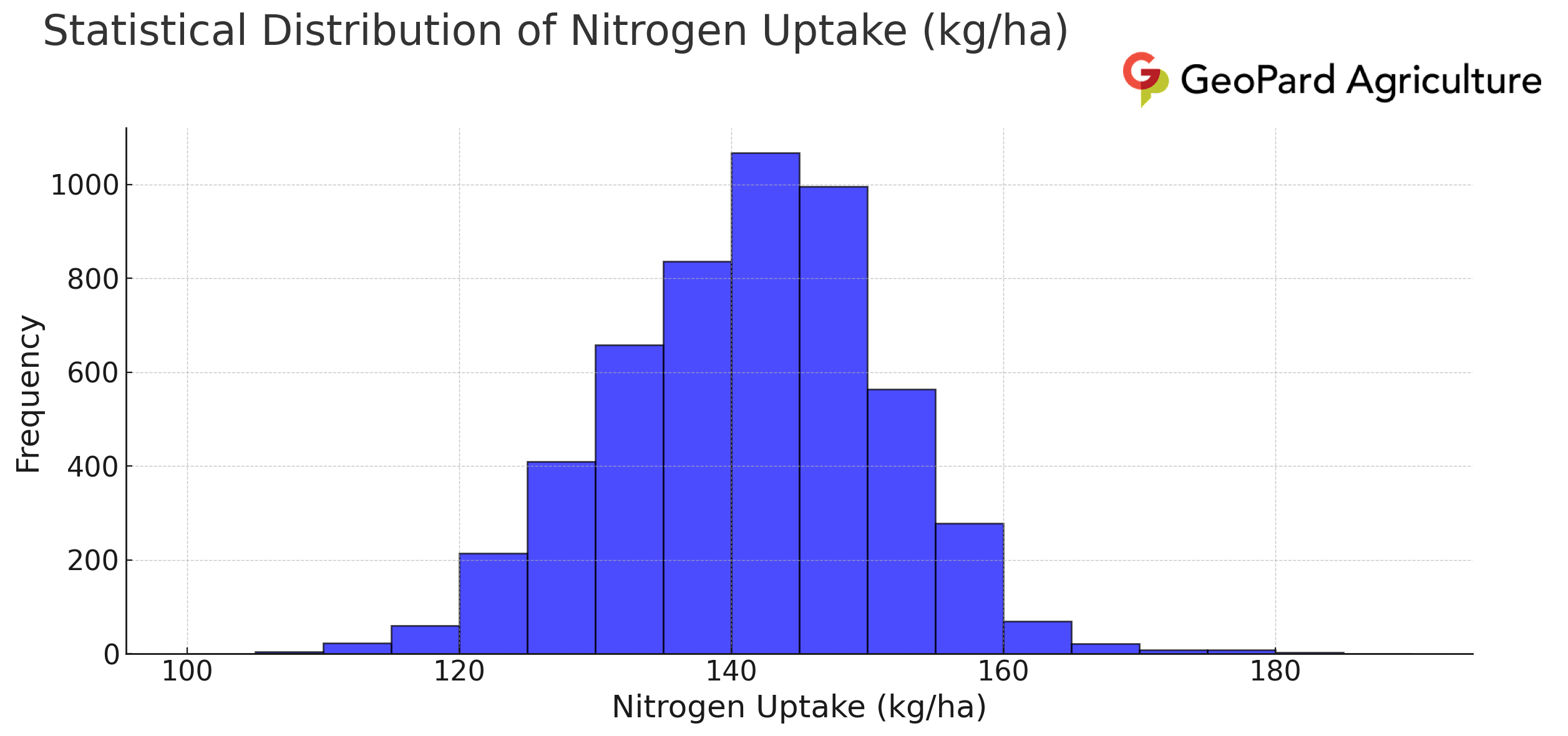
Statistical distribution chart for nitrogen uptake (NU) in 2023
Nitrogen Uptake (NU) 2023: Statistical Distribution
Nitrogen use efficiency (NUE)

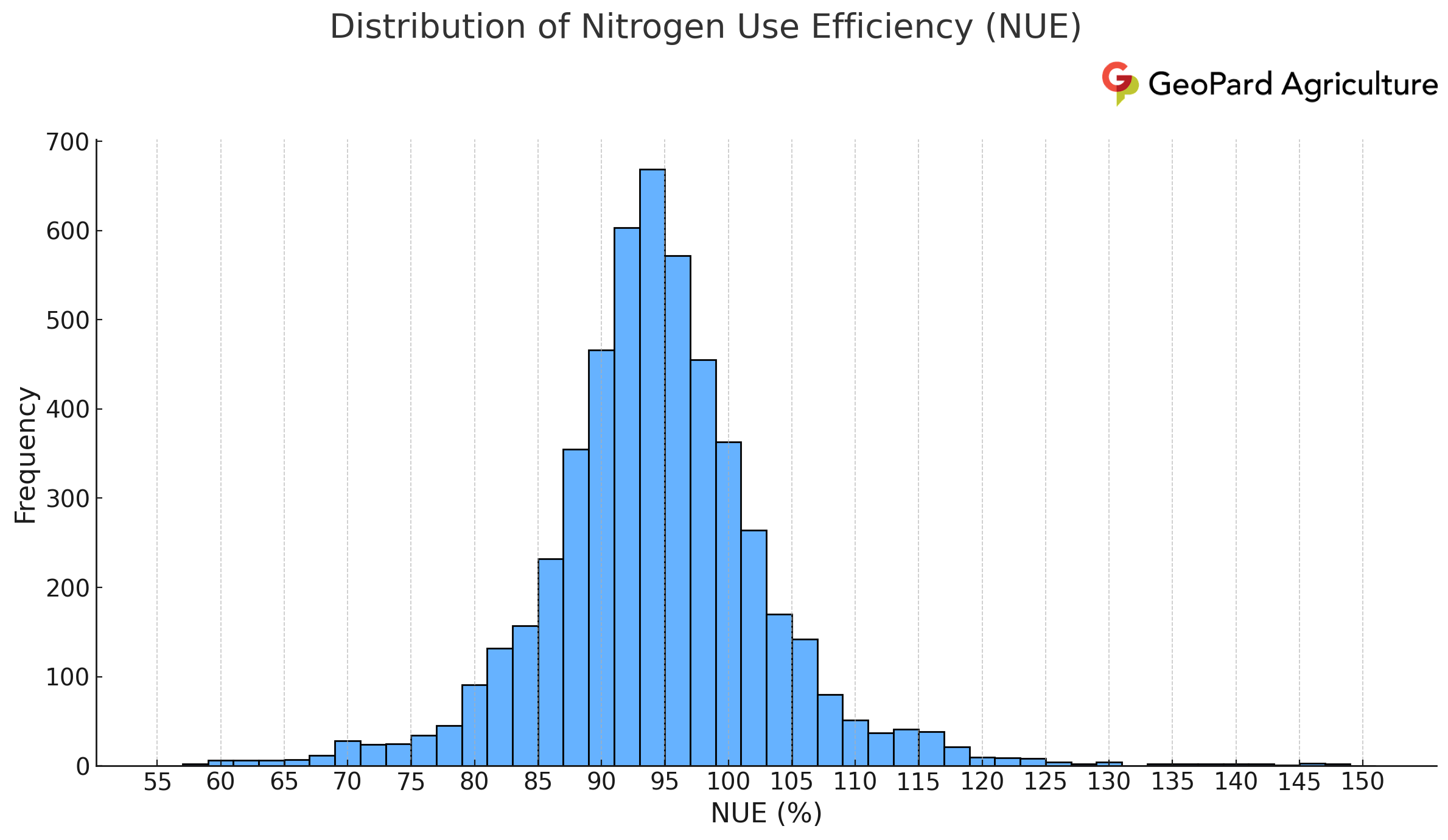
Nitrogen Use Efficiency (NUE) is the ratio of consumed Nitrogen to total applied Nitrogen, expressed in percentages, and is calculated from Nitrogen Uptake (NU) and Total Applied Nitrogen (TAN).

An NUE near 100% signifies optimal utilization where plants have consumed almost all applied Nitrogen.

Whereas values around 50% indicate over-application, leading to residual Nitrogen in the soil.

And values over 100% suggest under-application, relying on soil Nitrogen reserves.

These extremes are usually undesirable. Low NUE points to excess fertilization. Very high NUE suggests soil mining or missed application zones.

Nitrogen use efficiency (NUE) map for 2023
Nitrogen Use Efficiency (NUE) 2023
Statistical distribution chart for nitrogen use efficiency (NUE) in 2023
Nitrogen Use Efficiency (NUE) 2023: Statistical Distribution
Nitrogen surplus (NS)

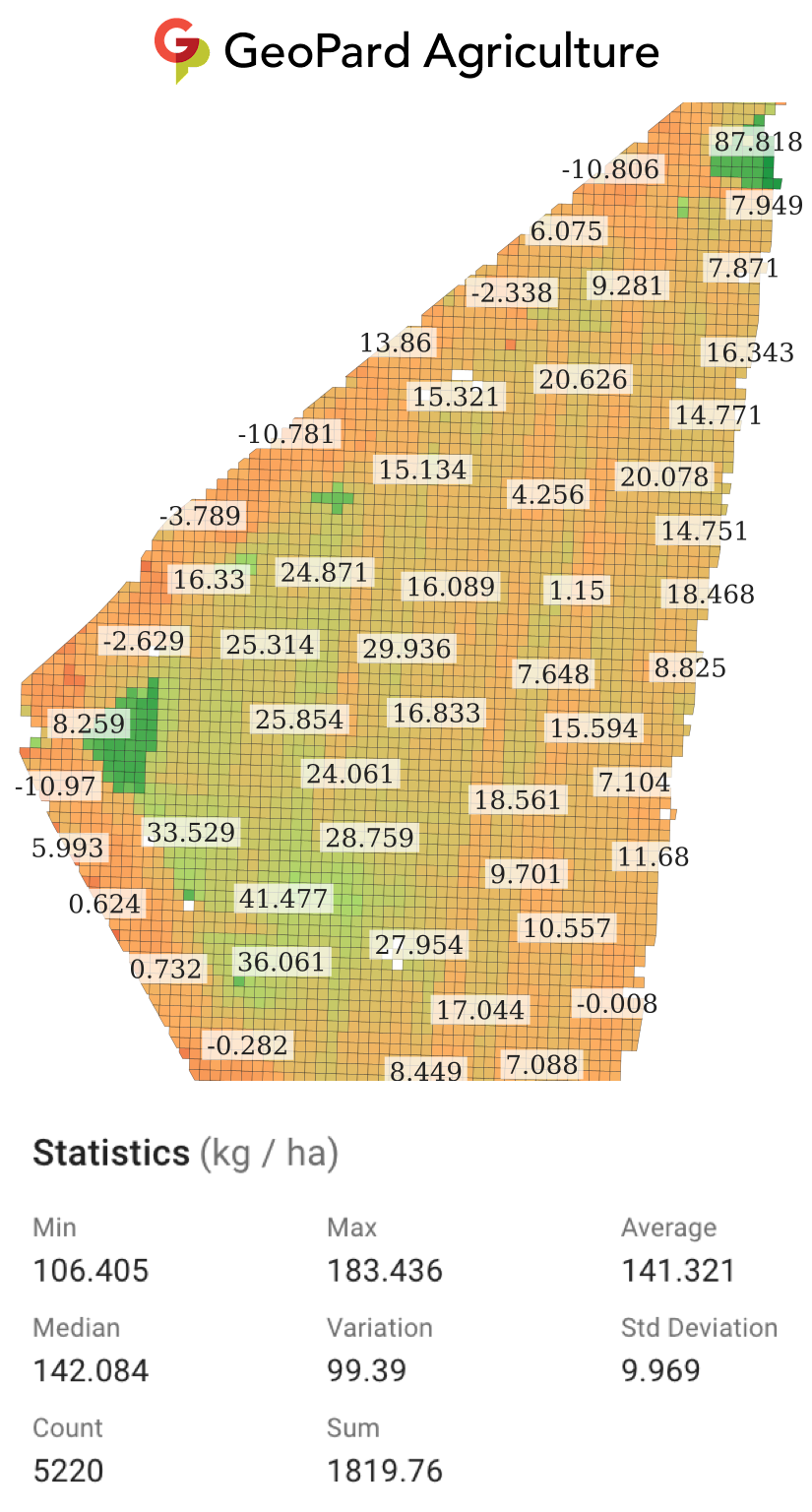
Nitrogen Surplus (NS) is the difference between the Total Applied Nitrogen (TAN) and the Nitrogen Uptake (NU) by plants, expressed in kg/ha, indicating the unused Nitrogen in a season. This metric is crucial for planning Nitrogen applications for the following season. It is visually represented in the following map.

Nitrogen surplus (NS) map in kg/ha for 2023
Nitrogen Surplus (NS) 2023

Conclusion

  1. Data Capturing: GeoPard's seamless integration with the John Deere Operations Center enables real-time and accurate data capture, forming the backbone of all subsequent analytics. Additionally, GeoPard API capabilities extend to working with various machinery proprietary formats, ensuring comprehensive data incorporation. Additional data calibration is required and incorporated as part of the subsequent analytics in GeoPard.

  2. Nitrogen Usage Profile: The Nitrogen Usage Profile, encompassing Total Applied Nitrogen (TAN), Nitrogen Uptake (NU), Nitrogen Use Efficiency (NUE), and Nitrogen Surplus (NS), provides a holistic view of nitrogen geospatial and statistical dynamics in the field. These metrics collectively guide crop growers in understanding the complete nitrogen lifecycle and its efficient management in the season.

  3. Adaptive Nitrogen Strategies: By leveraging insights from the Nitrogen Usage Profile, growers can fine-tune their nitrogen application strategies, catering to the diverse needs of different field areas. This approach not only enhances crop yields but also promotes sustainable and efficient agricultural practices, addressing the unique nitrogen requirements (costs) of various field sections.

Last updated

Was this helpful?