> For the complete documentation index, see [llms.txt](https://docs.geopard.tech/geopard-tutorials/llms.txt). Markdown versions of documentation pages are available by appending `.md` to page URLs; this page is available as [Markdown](https://docs.geopard.tech/geopard-tutorials/ar/jwlh-almntj-ttbyq-alwyb/khraet-almnatq-walthlylat/inshaa-khryth-mnatq-bastkhdam-byanat-altrbh-aw-alintajyh-aw-alttbyq-alfaly.md).
# إنشاء خريطة مناطق باستخدام بيانات التربة أو الإنتاجية أو التطبيق الفعلي
إذا كنت ترغب في إنشاء خريطة مناطق من مجموعة بيانات، فقم أولًا بتحميل البيانات إلى الحقل.
1. حدد الحقل في القائمة، وانقر على **إنشاء خريطة مناطق** الزر، ثم اختر **طبقة واحدة**، ثم انقر على **التالي**.
2. اختر **بيانات التربة** للنوع للمتابعة. يمكنك أيضًا استخدام بيانات الغلة أو بيانات التطبيق الفعلي.
3. في الخطوة التالية، اختر مجموعة بيانات التربة المحددة التي تريد استخدامها وانقر على **التالي**.
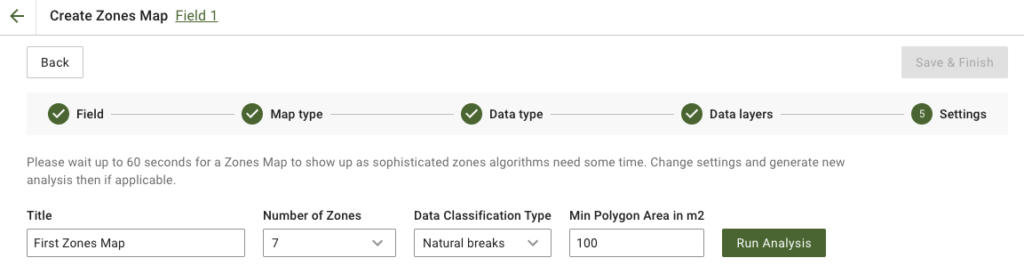
4. في الخطوة التالية، يمكنك تعديل العنوان، وتغيير عدد المناطق، [اختيار نوع تصنيف البيانات](/geopard-tutorials/ar/jwlh-almntj-ttbyq-alwyb/khraet-almnatq-walthlylat/bastkhdam-tsnyf-albyanat.md)، وتحديد الحد الأدنى لمساحة المضلع بالمتر المربع. انقر على **تشغيل التحليل** للمتابعة.
قد يستغرق التحليل ما يصل إلى 60 ثانية، حسب المعلمات التي حددتها.
5. بمجرد الانتهاء، انقر على **حفظ وإنهاء**.
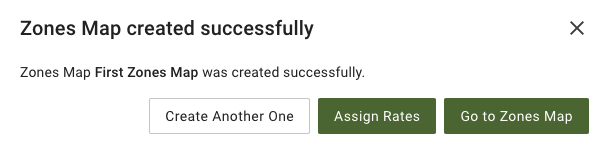
بعد حفظه، سترى الرسالة التالية:
يمكنك إنشاء خريطة مناطق أخرى، أو تعيين معدلات، أو فتح خريطة المناطق التي أنشأتها للتو. إذا فتحتها، فسترى عرضًا مشابهًا.
---
# Agent Instructions
This documentation is published with GitBook. GitBook is the documentation platform designed so that both humans and AI agents can read, navigate, and reason over technical content effectively. Learn more at gitbook.com.
## Querying This Documentation
If you need additional information that is not directly available in this page, you can query the documentation dynamically by asking a question.
Perform an HTTP GET request on the current page URL with the `ask` query parameter, and the optional `goal` query parameter:
```
GET https://docs.geopard.tech/geopard-tutorials/ar/jwlh-almntj-ttbyq-alwyb/khraet-almnatq-walthlylat/inshaa-khryth-mnatq-bastkhdam-byanat-altrbh-aw-alintajyh-aw-alttbyq-alfaly.md?ask=&goal=
```
`ask` is the immediate question: it should be specific, self-contained, and written in natural language.
`goal` is optional and describes the broader end goal you are ultimately trying to accomplish on behalf of the user. GitBook uses it to tailor the answer towards what is most useful for that goal.
The response will contain a direct answer to the question and relevant excerpts and sources from the documentation.
Use this mechanism when the answer is not explicitly present in the current page, you need clarification or additional context, or you want to retrieve related documentation sections.